
Happy hens. Superior eggs.

Six grams of complete protein. Choline for the brain. Lutein for the eyes. Fourteen essential nutrients in every egg.
Batch Freshness
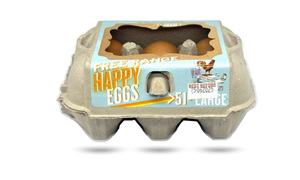
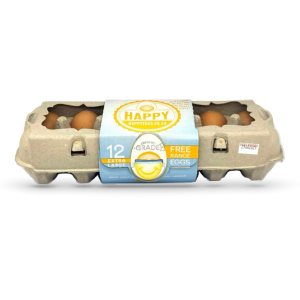
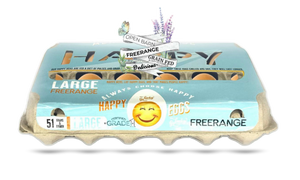
Every Happy Eggs carton carries an FSMS batch sticker. Here's the freshness on the most recent delivery to Spar Alphen.
Got a different batch? Scan the QR sticker on your carton, or look up your specific batch ID:
Check your batch →Nutrition
Eggs are one of the most nutrient-dense foods on the planet. Here's what's in every shell.
All nine essential amino acids — about 6 g of clean, bioavailable protein per egg. The highest-quality protein found in any food.
~147 mg per egg — vital for memory, focus and nerve signalling. A Cape Town study found over 78% of pregnant women fell short of the daily target.
The only carotenoids that accumulate in your retina — protecting against blue light, age-related macular damage and cataracts.
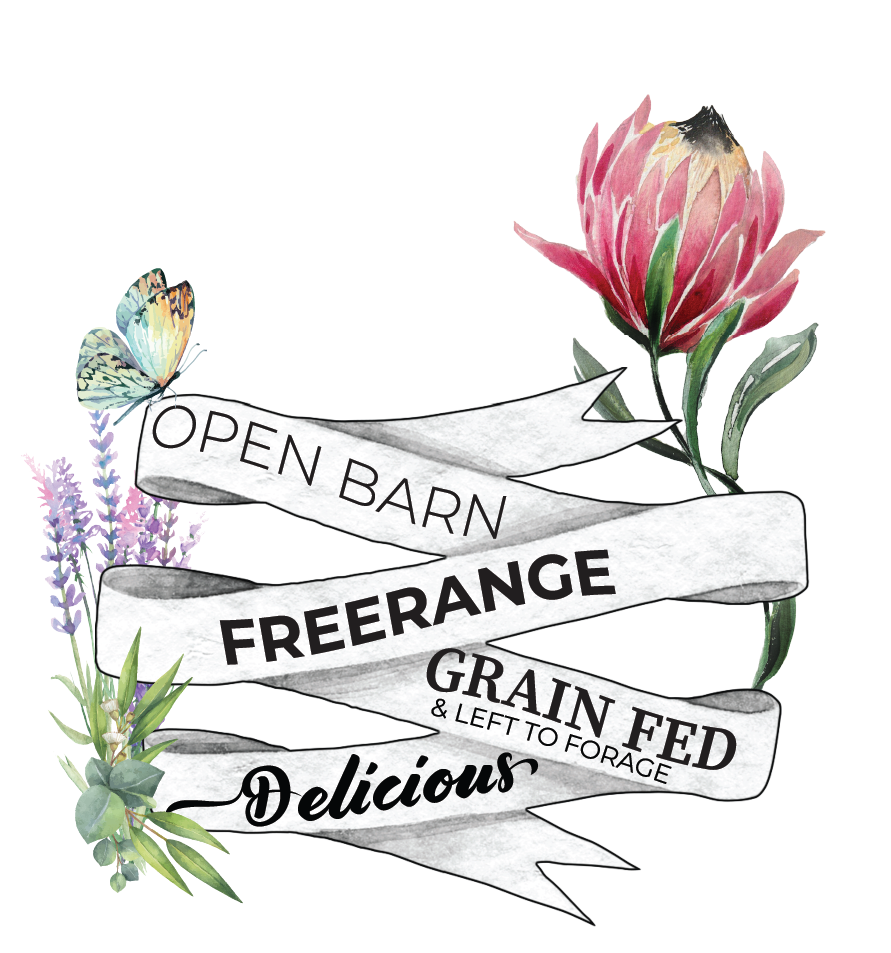
Audited and certified Free Range. Spacious houses, daily collection, family-run — the way eggs should be.
From feed to yolk
Most layer eggs in this country are produced on hexane-extracted meal and synthetic colourants. Ours aren't. Free-range hens, cold-pressed canola cake, and pasture access — that's the whole story behind the yolk you're looking at.
The cake left after canola seed is mechanically pressed for oil — no hexane, no solvents. About 36% plant protein with a balanced amino acid profile, and the 10–15% residual oil still in the cake carries the vitamins and fatty acids straight into the yolk.
Roughly 10% of canola oil is alpha-linolenic acid — the plant-source omega-3. Hens metabolise it and deposit it directly into the yolk, which is why eggs from canola-fed flocks measure higher in omega-3 than the corn-and-soy default.
Tocopherols (vitamin E) are heat-sensitive antioxidants that solvent extraction destroys. Cold-pressing leaves them in the cake — the hens eat them, and they pass into the yolk as a natural antioxidant.
Two reasons. The residual carotenoids the cold-pressed cake retains, and the lutein & zeaxanthin the hens pick up from green pasture. No paprika oleoresin, no marigold extract, no yolk colour fan dialled to 14 — just diet and daylight.
A feed with its natural oils and fat-soluble vitamins (A, D, E, K) still attached gives a hen more useable energy than stripped meal does. Healthier birds lay better, longer, with stronger shells — and you taste it in the egg.
No hexane-extracted meal. No synthetic yolk colourants. The diet is cold-pressed cake, grain, and whatever the hens find on pasture — which is what the colour, the omega-3 lift and the vitamin E in the yolk actually trace back to.
For the curious
Egg trivia for the curious — and for kids reading over your shoulder.
A healthy hen lays around 280 eggs a year. Almost one a day.
Each egg contains all nine essential amino acids — the building blocks your body can't make on its own.
Fourteen essential nutrients in a single shell — including vitamins A, D, E, B2 and B12.
You can guess a hen's eggshell colour from her earlobes — white earlobes = white eggs, red earlobes = brown eggs.
Eggshell colour is decided by the hen's breed, not what she eats. Brown, white, or blue — the inside is the same.
Blue eggs exist because of an ancient virus — a retrovirus rewrote the chicken's DNA thousands of years ago.
Inspiration
A growing library of chef-crafted egg techniques from the best on YouTube. Tap any title to play.
 ▼
▼ ▼
▼ ▼
▼ ▼
▼ ▼
▼ ▼
▼ ▼
▼ ▼
▼ ▼
▼ ▼
▼ ▼
▼ ▼
▼From farm to fridge
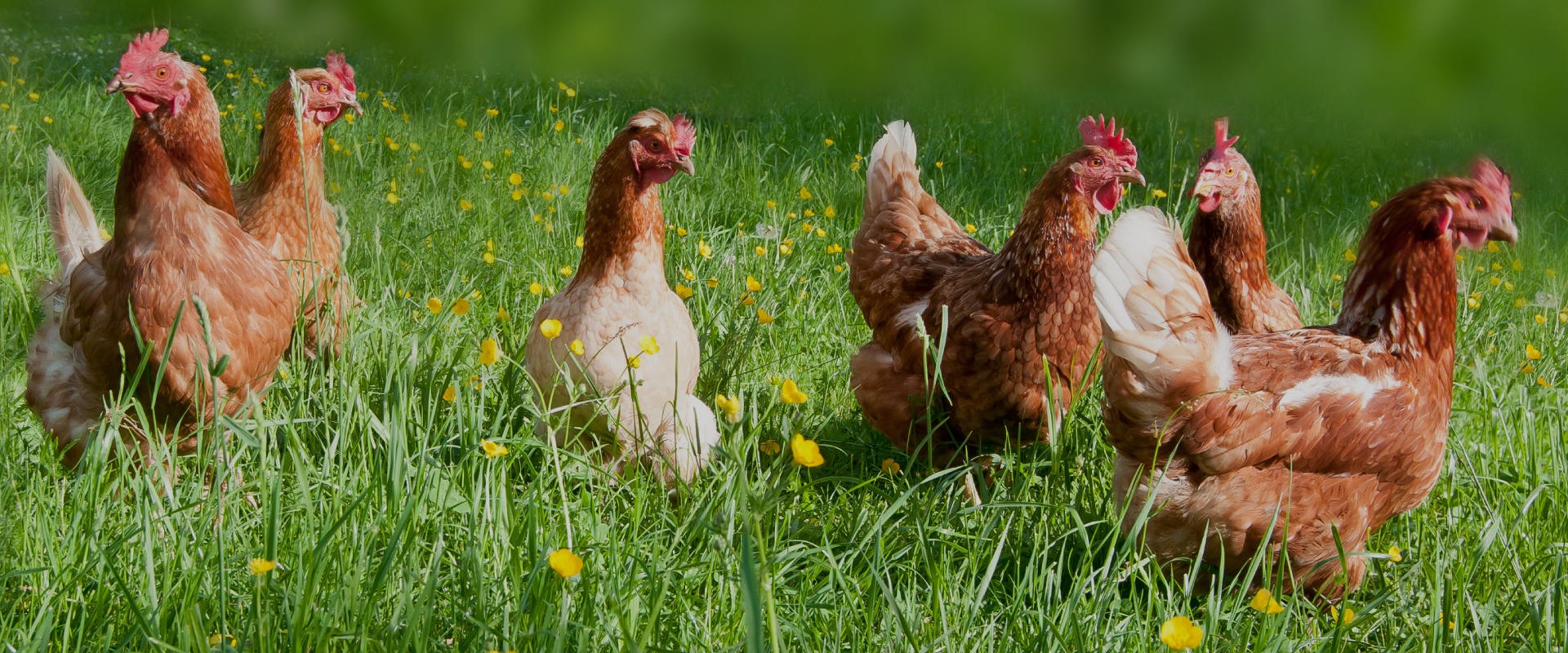
Happy Eggs come from two certified Free Range farms in the Western Cape — one in the Paardeberg (Noord Paarl), one in Blombos near Malmesbury. Spacious houses, daily collection, in-week packing — every carton looked over by a human hand before it reaches your shelf.